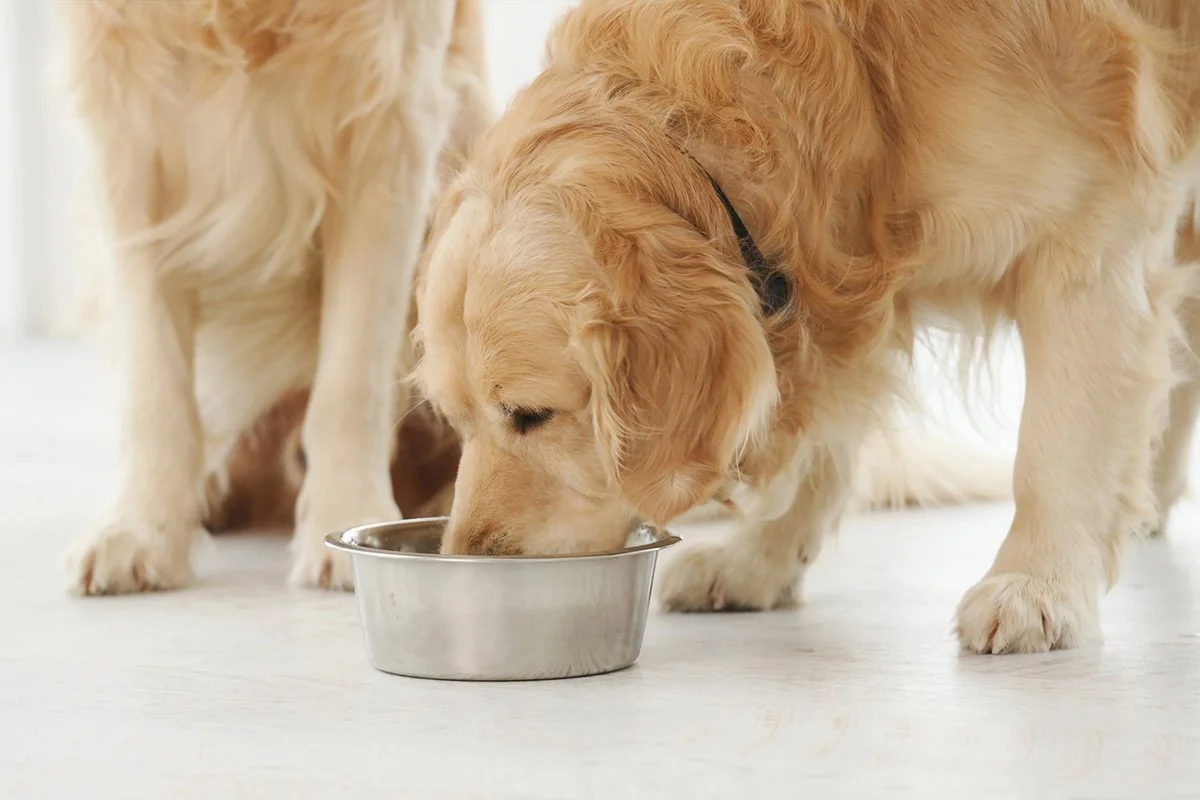
Some dogs approach dinner like they’re late for an important meeting.
The bowl hits the floor, there is a blur of kibble, and before you have even put the food bag away, dinner is over.
Fast eating is common in dogs, and for some, it is simply part of how they approach food. But eating too quickly can sometimes lead to digestive discomfort, regurgitation, or other problems. It can also make mealtime less enriching than it could be.
So why do some dogs inhale their food, and when is it worth encouraging them to slow down?
Why Do Some Dogs Eat So Fast?
There is not one single reason dogs eat quickly. For many dogs, several factors may be involved.
They Are Naturally Very Food-Motivated
Some dogs simply love food.
They hear the scoop hit the bowl and suddenly nothing else in the world matters.
Breed, personality, previous experiences, and individual appetite can all influence how excited a dog becomes around meals. A dog that consistently eats quickly but otherwise maintains a healthy weight, has normal digestion, and behaves normally may simply be an enthusiastic eater.
That does not necessarily mean anything is wrong, but it may still be worth slowing mealtime down a little.
They Learned to Compete for Food
Dogs that grew up around littermates or lived in multi-dog environments may learn that eating quickly means getting their share before someone else does.
That habit can stick around even after the competition disappears.
The same thing can happen in a current multi-dog household. If dogs eat close together, one may feel pressure to finish quickly, especially if another dog tends to hover nearby.
Feeding dogs separately can help make meals feel calmer and remove some of that perceived competition.
Their Meal Is Over Before Their Brain Catches Up
Eating is not only about calories. It is also an activity.
Dogs naturally spend time sniffing, searching, licking, tearing, chewing, and working for food. A bowl of kibble can disappear in less than a minute, which means the eating experience itself is over almost immediately.
Slowing things down gives dogs more time to interact with their meal and can add a little extra mental stimulation to the day.
Their Feeding Schedule May Be Playing a Role
A dog that is extremely hungry by mealtime may be more likely to rush through food.
For some dogs, dividing the same daily amount into two or three smaller meals can help. This does not mean adding more calories. It simply changes how those calories are distributed throughout the day.
Feeding schedules should still fit your dog's age, health needs, activity level, and overall routine.
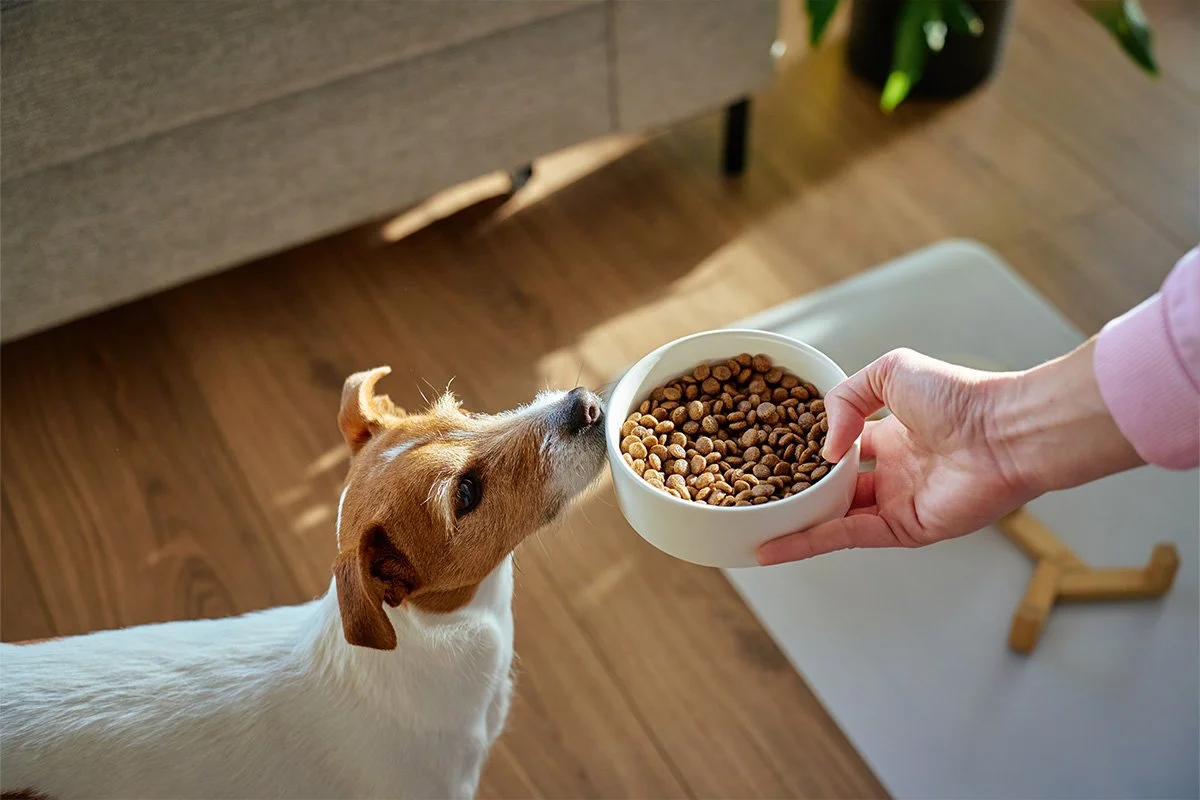
Is Eating Too Fast Bad for Dogs?
Not every fast eater develops problems, but eating extremely quickly can make a few things more likely.
Regurgitation
A dog that swallows large amounts of food rapidly may bring some of it back up shortly afterward.
Regurgitation is different from vomiting. It often happens soon after eating and may look like mostly undigested food coming back up with very little warning.
Slowing down the meal can sometimes help dogs that routinely eat so quickly that their dinner immediately makes a return appearance.
Frequent regurgitation or vomiting, however, deserves a conversation with your veterinarian.
Gas and Digestive Discomfort
Dogs can swallow air while gulping food, especially when they barely pause between bites.
That may contribute to burping, gas, or an uncomfortable, overly full feeling after meals.
Eating more slowly will not solve every digestive issue, but it can remove one factor that may be making mealtime harder on the stomach.
Choking
Dogs that swallow large pieces of food or treats without chewing appropriately may have a greater risk of choking.
This is one reason it is important to choose chews, treats, and feeding tools that are appropriately sized for your dog and to supervise them while eating.
What About Bloat?
You may have heard that fast eating causes bloat.
The relationship is more complicated than that.
Gastric dilatation-volvulus, commonly called GDV or bloat, is a serious and potentially life-threatening condition in which the stomach fills with gas and may twist. Large and deep-chested breeds are particularly at risk, and multiple factors appear to influence whether GDV develops.
Fast eating has been investigated as a possible risk factor, but it should not be treated as the sole cause.
If your dog suddenly develops a swollen abdomen, repeatedly tries to vomit without producing anything, becomes restless, weak, or appears to be in significant distress, seek emergency veterinary care immediately.
Should You Slow Your Dog Down?
If your dog finishes every meal in seconds, slowing them down is usually a reasonable goal.
Even when fast eating is not causing a medical problem, a slower meal can provide more enrichment and give your dog more time to enjoy the experience.
Fortunately, there are plenty of simple ways to do it.
Try a Slow Feeder Bowl
Slow feeder bowls use ridges, grooves, or raised sections that prevent dogs from grabbing an entire mouthful at once.
Instead, they have to work around the obstacles to reach the food.
For many dogs, this turns a 30-second meal into several minutes.
Choose a feeder appropriate for your dog's size and muzzle shape. A design that works beautifully for a long-nosed dog may be frustrating for a flat-faced breed.
The goal is to slow your dog down, not make dinner impossible.
Turn Dinner Into a Puzzle
Food puzzles and dispensing toys can make dogs work for portions of their meal.
Instead of eating from one open bowl, your dog may need to nudge, roll, lick, or manipulate something to access the food.
This can be especially helpful for dogs that need more mental stimulation during the day.
Start with an easy puzzle and let your dog learn how it works. Making the challenge too difficult right away can create frustration instead of enrichment.
Use a Snuffle Mat
For dry food, a snuffle mat can turn dinner into a nose-work activity.
Scatter kibble through the fabric and let your dog search for individual pieces.
Sniffing naturally slows the meal while encouraging one of the behaviors dogs already love doing.
Just remember that fabric feeding toys should be supervised, especially with dogs that are inclined to chew or swallow things that are not food.
Scatter Feed
You do not necessarily need a special product.
Try spreading dry food across a clean floor, feeding mat, or safe area of the yard rather than placing it all in a bowl.
Instead of taking giant mouthfuls, your dog has to move around and find individual pieces.
It is simple, inexpensive, and surprisingly effective for some enthusiastic eaters.
Add Moisture to the Meal
Adding warm water, pet-safe bone broth, or wet food can change the texture of a dry meal and encourage some dogs to lick rather than gulp.
It also adds moisture to the bowl, which can be useful for dogs that do not drink much throughout the day.
If you add broth, make sure it is formulated for pets or does not contain ingredients such as onion or garlic.
And remember that toppers and wet foods add calories unless you adjust the rest of the meal accordingly.
Divide the Meal
Another easy option is serving dinner in two or three smaller portions rather than putting the full amount down at once.
You can give your dog one portion, pause briefly, and then offer the next.
For dogs that become overly excited as soon as the bowl appears, this can reduce the amount they are able to gulp at one time.
Feed Multiple Dogs Separately
If your dog eats as though another dog is coming for their dinner, there may be some truth to that perception.
Even dogs that never actually steal food from one another can create pressure simply by being nearby.
Try feeding dogs in separate rooms, crates, or designated spaces where each pet can eat without watching the others.
A calmer environment can make a surprisingly big difference.
Do You Need to Make Your Dog Chew Their Kibble?
Not necessarily.
Dogs do not chew food the same way humans do, and some dogs naturally swallow pieces of kibble with minimal chewing.
So the goal is not to force your dog to chew every bite 20 times.
What matters more is preventing frantic gulping, reducing the amount of food swallowed at once, and creating a calmer, more controlled eating experience.
When Fast Eating Suddenly Starts
A dog that has always eaten quickly is different from a dog whose appetite suddenly becomes much more intense.
If your dog becomes unusually ravenous, begins stealing food, loses weight despite eating normally or more than usual, drinks significantly more water, or shows other changes in behavior or digestion, talk with your veterinarian.
A sudden increase in appetite can sometimes be associated with an underlying health condition or medication.
The change itself is worth paying attention to.
A Slower Bowl Can Be a Better Bowl
For many dogs, fast eating is simply enthusiasm taken to the extreme.
But slowing things down can make meals more comfortable, more engaging, and a lot less frantic.
Try a slow feeder, puzzle toy, snuffle mat, scatter feeding, or smaller portions and see what works best for your dog. You may discover that dinner becomes one of the easiest enrichment activities in their day.
And if you are not sure which feeding setup makes sense for your dog's size, eating style, or current diet, stop by Wags to Wiskers. We can help you compare slow feeders, enrichment options, toppers, and other simple ways to make mealtime work a little better.