
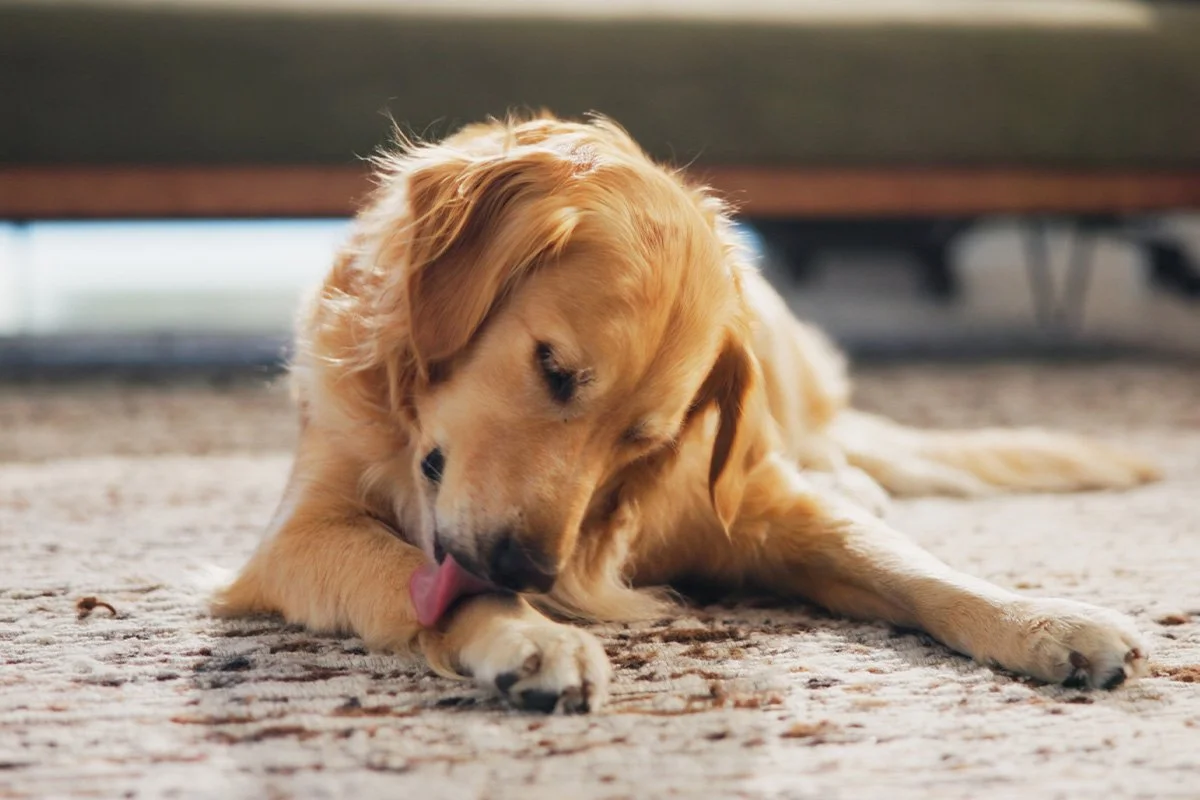
A little paw licking is normal. Dogs use their mouths to groom themselves, investigate smells, and deal with the occasional itch.
But when paw licking becomes frequent, intense, or hard to interrupt, it is usually worth paying closer attention.
The cause could be something simple, like dry skin or a little irritation after a walk. It could also be related to allergies, a minor injury, parasites, or another issue that needs veterinary care.
The key is to look at the whole picture: how often your dog licks, whether one paw or several are involved, what the paws look like, and whether the behavior changes with the seasons.
First, How Much Paw Licking Is Normal?
Many dogs lick their paws occasionally, especially after spending time outside.
You may notice a quick cleanup after a walk, after coming in from the rain, or before settling down for a nap. That is usually nothing to worry about.
More persistent licking is different.
Pay attention if your dog:
Licks or chews their paws repeatedly throughout the day
Wakes up to lick them
Focuses intensely on one paw
Causes redness, hair loss, or raw skin
Seems uncomfortable when you touch their feet
Starts licking much more than they normally do
A sudden change in behavior is often more important than the licking itself.
Seasonal Irritation Can Play a Big Role
Paws deal with a lot.
They come into direct contact with grass, pollen, mud, pavement, snow, ice, salt, and everything else your dog walks through. That means the reason your dog is licking may change depending on the time of year.
Spring and Summer
Warmer months can bring increased exposure to grass, pollen, weeds, dust, and insects.
Some dogs become especially itchy after walking through certain types of grass or spending time outdoors during high-pollen periods.
Hot pavement can also irritate paw pads. Even when the temperature does not seem extreme, asphalt and concrete can become much hotter than the surrounding air.
After walks, it can help to:
Check between the toes for grass seeds, burrs, or debris
Wipe paws with a damp cloth
Rinse off visible dirt or pollen
Let paws dry completely before your dog settles down
Use a paw balm when pads feel dry or rough
A good paw balm can help moisturize and protect the pads' surfaces, especially when they are exposed to heat, rough terrain, or repeated washing.
Fall
Fall can be deceptively rough on paws.
Dry air, fallen leaves, wet weather, and changing outdoor conditions can all contribute to irritation. Dogs may also encounter more sticks, burrs, and plant debris during walks.
This is a good time to get into the habit of checking your dog's paws regularly rather than waiting until they start licking.
Winter
Michigan winters can be especially hard on paws.
Cold temperatures, ice, snow, road salt, and de-icing chemicals can all dry or irritate paw pads. Snow can also collect between the toes, especially on dogs with longer fur around their feet.
Paw balm can be particularly useful in winter because it creates a protective layer over dry pads and helps prevent them from cracking or becoming rough.
After winter walks:
Wipe or rinse paws to remove salt and de-icer residue
Dry between the toes
Check for packed snow or ice
Use paw balm as needed
Consider dog boots for pets that tolerate them
If your dog refuses boots, that does not mean you are out of options. Keeping walks shorter in severe weather and cleaning paws afterward can still make a meaningful difference.
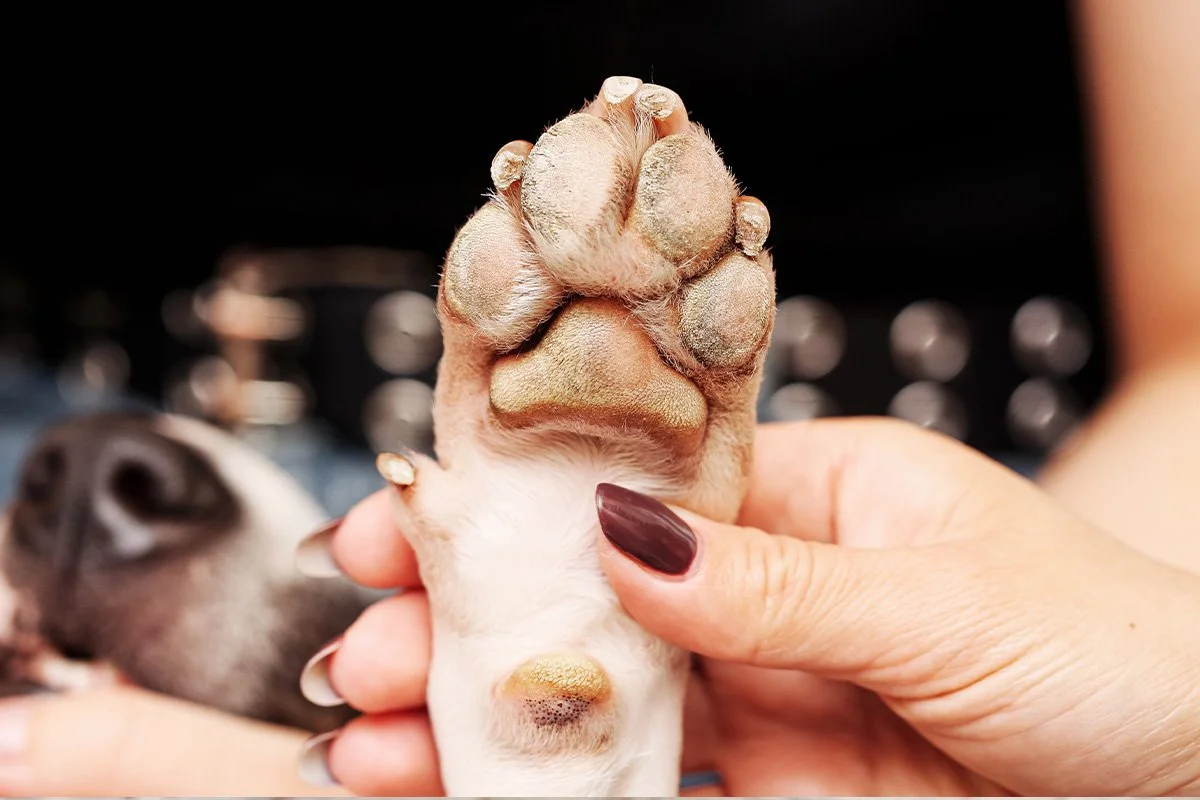
Allergies Are Another Common Reason Dogs Lick Their Paws
Paw licking is often associated with allergies, but that does not mean every itchy paw is caused by food.
Dogs can react to environmental allergens such as pollen, grasses, mold, or dust mites. These sensitivities may become more noticeable during certain times of year.
You may also see itching elsewhere on the body, redness between the toes, recurring ear problems, or licking that affects multiple paws.
Food sensitivities can sometimes contribute to skin symptoms as well, but changing diets repeatedly without a plan can make it harder to figure out what is actually going on.
If you suspect allergies, it is usually better to look for patterns and talk with your veterinarian before making major dietary changes.
Sometimes the Problem Is Just One Paw
If your dog suddenly starts obsessing over a single foot, take a closer look.
You may find:
A small cut
A splinter
A cracked nail
A torn nail
A thorn
A burr
A piece of debris between the toes
A tender or swollen spot
Dogs often lick an area that hurts.
If the paw looks swollen, is bleeding, has a damaged nail, contains something deeply embedded, or your dog is limping, veterinary care is the safer next step.
Dry or Cracked Paw Pads Can Be Uncomfortable
Dry paw pads can make dogs lick simply because the skin feels irritated.
This is especially common during winter2020/1/6/winter-essentials-for-dog-owners?rq=paw, after frequent exposure to rough surfaces, or in dogs whose paws are washed often.
A pet-safe paw balm can help support the skin barrier and keep pads moisturized.
Look for products made specifically for dogs rather than using human lotions or creams, since dogs are likely to lick whatever goes on their feet.
Paw balm works best as part of a routine, not only after the pads become badly cracked.
Yeast or Bacterial Irritation Can Make Licking Worse
Persistent licking creates moisture, and moisture can make an already irritated paw even more uncomfortable.
Sometimes dogs develop secondary skin problems between the toes or around the paw pads.
You may notice:
Redness
Swelling
A strong odor
Darkened skin
Moist or sticky areas
Discharge
Hair loss
Increasing tenderness
These signs are a good reason to involve your veterinarian, especially if home care is not helping.
Repeated licking can create a cycle in which irritation triggers licking, and licking in turn causes even more irritation.
Parasites Can Also Be a Factor
Fleas, mites, and other parasites can cause itching around the feet.
You may not always see the parasite itself.
If your dog is suddenly itchy in several areas, is chewing at their paws and skin, or seems more uncomfortable than usual, parasite prevention and veterinary guidance are worth reviewing.
Could It Be Boredom or Anxiety?
Sometimes licking is not primarily about the skin.
Dogs may lick their paws as a self-soothing behavior when they are bored, stressed, under-stimulated, or anxious.
This is more likely when the paws look normal but the licking happens during predictable situations, such as when your dog is left alone, settling down at night, or experiencing changes in routine.
More enrichment may help.
Try adding:
Longer sniffing walks
Food puzzles
Lick mats
Training games
Chew time
Short play sessions throughout the day
Still, it is important not to assume a behavioral cause before ruling out discomfort. A dog that keeps licking may genuinely be itchy or sore.
What You Can Do at Home
If the paws look generally healthy and your dog is only mildly irritated, a few simple habits may help.
Keep Paws Clean
Wipe or rinse paws after walks, especially during allergy season, muddy weather, or winter salt season.
Avoid harsh soaps unless your veterinarian recommends them.
Dry Thoroughly
Moisture between the toes can contribute to irritation.
After washing or walking through snow and rain, dry the feet carefully.
Use Paw Balm
A dog-safe paw balm can help protect dry or rough pads and add an extra layer of support against seasonal exposure.
This is especially useful:
During winter
On hot or rough surfaces
After frequent paw washing
For dogs prone to dry pads
Trim Excess Fur Around the Feet
Long fur can trap mud, moisture, snow, and debris.
Keeping the area tidy may make paws easier to inspect and clean.
Give Them Something Else to Do
If boredom seems to be contributing, enrichment can help break the habit.
A stuffed toy, lick mat, puzzle feeder, or sniffing game can redirect your dog toward a more productive activity.
When Should You Call the Vet?
Some paw licking can be managed with simple home care, but persistent or severe symptoms deserve professional attention.
Contact your veterinarian if you notice:
Significant swelling
Bleeding
Open sores
Pus or discharge
A strong or unusual odor
Limping
A broken or torn nail
A foreign object you cannot remove safely
Severe redness
Licking that continues despite basic care
Symptoms affecting several areas of the body
Sudden, intense licking with no obvious cause
Repeated paw problems can have several possible causes, and getting the right diagnosis is more useful than cycling through products and food changes on your own.
Pay Attention to the Pattern
One of the most helpful things you can do is pay attention to the pattern behind the licking.
Notice whether it tends to flare up during certain seasons, happens mostly after walks, or consistently involves the same paw. It can also be useful to think about anything that changed around the time the behavior started, such as a new food, a different walking route, or more time spent outdoors.
Those details can make it much easier to narrow down what may be bothering your dog, and in some cases, the solution may be surprisingly simple.
A quick paw rinse, a little paw balm, shorter walks on days with extreme temperatures, or more regular foot checks may be enough to keep mild seasonal irritation from becoming a bigger problem.
If you are looking for paw-care products, seasonal protection, or everyday ways to keep your dog more comfortable, stop by Wags to Wiskers. We can help you find paw balms and other practical options for your dog’s routine.