
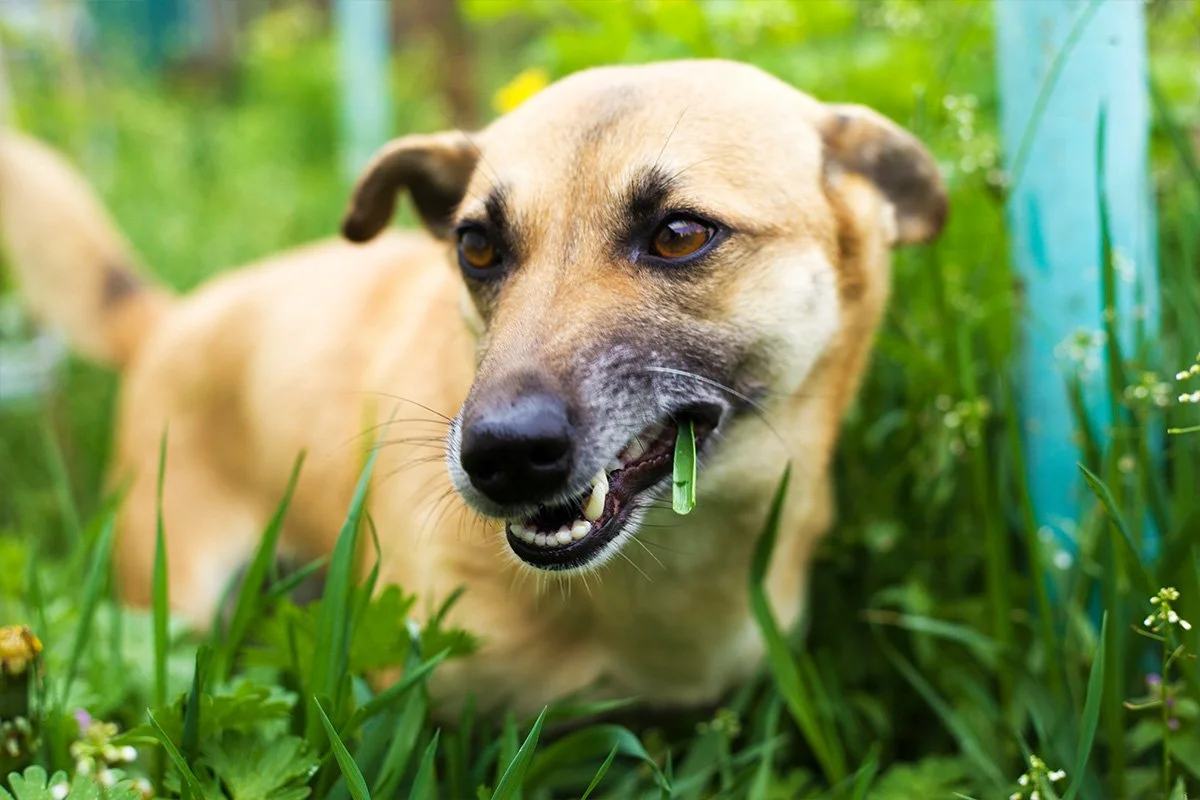
You head outside with your dog, ready for a walk, and they immediately lower their head and start grazing like a tiny, determined cow.
Sound familiar?
Grass eating is one of those dog behaviors that can look strange enough to make pet parents worry. Are they hungry? Is their stomach upset? Are they missing something in their diet? Are they secretly trying to become a lawn mower?
The reassuring news is that occasional grass eating is extremely common and is not automatically a sign that something is wrong. In a large survey of plant-eating dogs, grass was the most commonly consumed plant. Most dogs did not appear sick beforehand, and most did not regularly vomit afterward.
Still, the details matter. A dog who casually nibbles a few blades during a walk is different from a dog who suddenly races outside to eat large amounts of grass while showing signs of discomfort.
Here are some of the most common reasons dogs eat grass, what you can do about it, and when the behavior deserves a closer look.
First, Is It Normal for Dogs to Eat Grass?
In many cases, yes.
Dogs explore the world with their noses and mouths, and grass is simply another interesting part of their environment. Some dogs nibble it occasionally. Others make grazing a regular part of their outdoor routine.
One study found that 68% of plant-eating dogs were reported to eat plants daily or weekly. Only 9% were frequently reported to seem ill beforehand, while 22% frequently vomited afterward. That does not mean vomiting after grass eating never happens, but it does challenge the popular idea that dogs always eat grass because they are sick.
What matters most is your dog’s overall behavior. If they eat normally, have steady energy, maintain healthy digestion, and simply grab a few blades here and there, there is often little reason to panic.
They May Simply Like It
Sometimes the simplest explanation is the right one: your dog may enjoy eating grass.
Fresh grass has an interesting smell, texture, and taste. Some dogs seem especially interested in tender new growth or damp grass in the morning. Others have a favorite patch they visit with the dedication of a regular at a neighborhood café.
Grass eating can also be part of normal foraging and exploratory behavior. Merck Veterinary Manual notes that ingestive behaviors can be connected to ordinary investigation of the environment, although persistent consumption of unusual nonfood items can sometimes become a behavioral or medical concern.
If your dog looks relaxed, takes a few bites, and then moves on with their day, they may simply be enjoying the outdoor salad bar.
They Could Be Bored or Looking for Stimulation
Dogs need opportunities to sniff, explore, chew, play, and use their brains. When those needs are not being met, they sometimes create their own activities. Eating grass can become one of them.
A dog left alone in the yard may graze because there is not much else happening. During a slow walk, a dog may stop to chew grass because it adds another sensory experience to the outing.
If boredom seems possible, try adding more variety to the day:
Let your dog take slower, sniff-focused walks
Rotate toys instead of leaving everything out at once
Use puzzle feeders or treat-dispensing toys
Scatter part of a meal for a simple scent-searching game
Offer appropriate chews or lick mats during quiet time
The goal is not necessarily to eliminate every bite of grass. It is to make sure grass eating is not the only interesting item on your dog’s schedule.
Hunger and Feeding Routines May Play a Role
Some dogs appear more interested in grass when their stomach is relatively empty.
In a small controlled study, dogs spent more time eating grass before meals than after eating, suggesting that hunger or satiety may influence the behavior. The study was small, so it should not be treated as the final answer for every dog, but it supports the idea that meal timing may matter.
Pay attention to when your dog grazes. Does it usually happen first thing in the morning? Before dinner? During the longest gap between meals?
For some dogs, dividing the same appropriate daily portion into two or three meals may create a steadier routine. That does not mean every grass-eating dog needs more food. Portions should still reflect the dog’s age, size, activity level, and body condition.
Mild Stomach Discomfort Is Possible
Grass eating can sometimes happen alongside nausea or digestive discomfort.
You may notice your dog urgently asking to go outside, swallowing repeatedly, drooling, pacing, licking their lips, or eating grass quickly rather than casually nibbling. They may vomit shortly afterward.
That does not prove the grass itself is a treatment. Dogs can experience nausea for many reasons, and the grass may irritate the stomach enough to contribute to vomiting. Repeated vomiting can also accompany gastrointestinal conditions that require veterinary evaluation.
The important distinction is between an occasional episode and a pattern.
A dog who grazes calmly and feels fine afterward is one situation. A dog who repeatedly eats grass frantically, vomits, refuses food, or seems uncomfortable is telling you that something else may be happening.
Do Dogs Eat Grass Specifically to Make Themselves Vomit?
This is probably the most persistent grass-eating myth.
Some dogs do vomit after eating grass. But research suggests that most are not visibly ill beforehand and do not regularly vomit afterward. That makes it unlikely that every dog who eats grass is intentionally trying to empty their stomach.
A better way to think about it is this: grass eating can happen for several reasons, and vomiting is one possible outcome rather than the universal goal.
Your dog may like the texture. They may be bored. They may be hungry. They may feel mildly nauseated. Or they may have developed the habit for reasons known only to them and their highly mysterious canine agenda.
Does Grass Eating Mean Your Dog Needs More Fiber?
It is possible that dietary fiber influences the behavior in some dogs, but grass eating should not automatically be treated as proof of a fiber deficiency.
One published case involved a dog with long-term grass eating and vomiting that improved after being switched to a higher-fiber diet. That is interesting, but a single case does not establish that low fiber causes grass eating in dogs generally.
If your dog eats a complete and balanced diet, has normal stools, maintains a healthy weight, and otherwise feels well, occasional grazing does not necessarily mean their food is inadequate.
If the behavior is frequent, you can take a practical look at:
Whether the food is complete and balanced for your dog’s life stage
How consistently meals are offered
Stool quality and frequency
Whether portions match current activity and weight
Any recent changes in appetite, digestion, or energy
A food change, fiber addition, probiotic, or digestive supplement should have a clear reason behind it. Throwing five new things into the bowl at once makes it much harder to know what is helping.
Grass Is Not Always the Real Safety Concern
Plain, untreated grass is generally the least concerning part of the equation. The bigger question is what may be on or around it.
Avoid letting your dog graze in areas that may have been treated with herbicides, pesticides, or fertilizers. The ASPCA recommends following lawn-product directions carefully and keeping pets away from treated areas until products have been watered in or the area has dried as directed. Fertilizers can cause gastrointestinal and other symptoms if ingested.
Also watch for:
Toxic weeds, flowers, or landscaping plants
Mushrooms mixed into the lawn
Grass growing beside busy roads
Areas contaminated by animal waste
Sharp seed heads or tough plant material
Large quantities of long grass that could be difficult to digest
Grass and soil can also expose dogs to parasites or other organisms, particularly in heavily used public spaces.
When you do not know whether a lawn has been treated, it is safer to redirect your dog and keep moving.
Puppies, Adults, and Senior Dogs May Graze for Different Reasons
Puppies investigate nearly everything with their mouths, so occasional grass chewing may simply be part of learning about the world. Supervision is especially important because puppies are not always selective about which plants, sticks, mulch, or mystery objects they sample.
Adult dogs may graze because of habit, taste, boredom, hunger, or mild digestive discomfort.
With senior dogs, pay closer attention to a new or increasing behavior. A senior who has never cared about grass but suddenly begins eating it frequently may also be experiencing changes in appetite, digestion, medication tolerance, or general comfort.
The behavior itself does not provide a diagnosis. The change from your dog’s usual pattern is often the more useful clue.
When Should You Be Concerned?
Occasional grazing by an otherwise happy, healthy dog is usually different from persistent or urgent grass eating accompanied by other symptoms.
Contact your veterinarian when grass eating is new, excessive, or paired with signs such as:
Repeated vomiting or diarrhea
Blood in vomit or stool
Loss of appetite
Unusual tiredness or weakness
Drooling, repeated swallowing, or obvious nausea
Abdominal pain, bloating, or restlessness
Weight loss
Difficulty passing stool
Eating large amounts of grass or other nonfood items
Possible exposure to lawn chemicals or toxic plants
If you suspect poisoning, bring information about the product or plant involved when seeking help. The ASPCA Poison Control Center also maintains resources on toxic plants and substances.
What Can You Do at Home?
Start by observing rather than immediately trying to stop the behavior.
Notice when it happens, how much your dog eats, whether it occurs before meals, and how they act afterward. A simple pattern may emerge.
You can also make a few low-drama adjustments:
Keep meals and daily routines consistent. Provide plenty of fresh water. Add appropriate enrichment. Supervise outdoor grazing. Redirect your dog away from treated lawns and unknown plants. Review their food and portion sizes if appetite or digestion has changed.
Avoid punishing your dog for eating grass. Calm redirection is usually more useful, especially when the behavior is exploratory or habit-based.
For questions about food quality, feeding schedules, digestive support, fiber, probiotics, or enrichment, stop in and talk with the team at Wags to Wiskers. We can help you look at the full routine and find practical options that fit your dog.
In most cases, a few blades of grass are simply another example of dogs being dogs: curious, slightly weird, and always ready to turn a walk into a snack opportunity.